
Bell Notes 🛎️ 📝

KIM Bell : Digital Vision Art Gallery
Currently building what excites me. Using Ai Tools. Vibe Coding listening to new music at GWOP University
Growing up in the 1980s, my introduction to the English language was anything but conventional. While many kids learned their ABCs through nursery rhymes or storybooks, my formative years were deeply influenced by the vibrant, emerging genre of rap music. This unexpected source became a powerful tool that not only enhanced my language skills but also shaped my understanding of culture, identity, and expression.
From the first time I heard the rhythmic beats and clever wordplay of artists like Run-D.M.C., LL Cool J, and the Fat Boys I was captivated. The infectious energy of rap music turned language into a dynamic experience. Unlike traditional educational methods, rap encouraged me to explore vocabulary through rhythm and rhyme. Phrases were delivered in a way that made them memorable, transforming complex ideas into digestible snippets. I found myself replaying songs, not just for the beats but to dissect the lyrics, trying to understand the meanings behind the words and curious to how they came up with these poetic lines.
The use of alliteration, internal rhyme, and metaphor in rap lyrics opened up a new world of linguistic creativity. For instance, the clever wordplay found in LL Cool J’s verses introduced me to concepts of similes and metaphors long before I encountered them in a classroom setting. I began to see language as a living, breathing entity that could be molded and shaped to convey a wide array of emotions and stories.
As I immersed myself in rap, my vocabulary expanded exponentially. Songs often featured slang and colloquialisms that were integral to understanding the culture they emerged from. Artists like Public Enemy and N.W.A. tackled social issues, using language that was both direct and evocative. I was introduced to terms and phrases that reflected real-life experiences, far removed from the sanitized versions typically found in school textbooks. This exposure not only broadened my vocabulary but also provided context, helping me understand the nuances of the language in a way that formal education did not.
Rap music was more than just a genre; it was a cultural movement that resonated with the social and political climate of the time. Listening to artists share their experiences gave me a sense of connection and understanding of the world around me. The themes of struggle, resilience, and community woven into the lyrics mirrored the realities many faced, including my own family’s experiences. This cultural lens enriched my understanding of language, as I learned to appreciate the emotional weight behind the words.
Furthermore, rap’s emphasis on storytelling taught me the importance of narrative in language. I began to experiment with my own writing, attempting to capture my thoughts and experiences in a similar fashion. The practice of writing lyrics, even if just for fun, allowed me to play with language, encouraging creativity and self-expression.
Reflecting on my childhood, it’s clear that rap music was a pivotal force in my journey to mastering the English language. Through its rhythms, rich vocabulary, and cultural narratives, rap not only enhanced my linguistic skills but also shaped my identity and worldview. It taught me that language is not just a tool for communication; it is a powerful means of expression, connection, and understanding. As I continue to appreciate the art form today, I recognize that my love for language began with the beats and rhymes of rap music, forever leaving a poetic mark on my life.
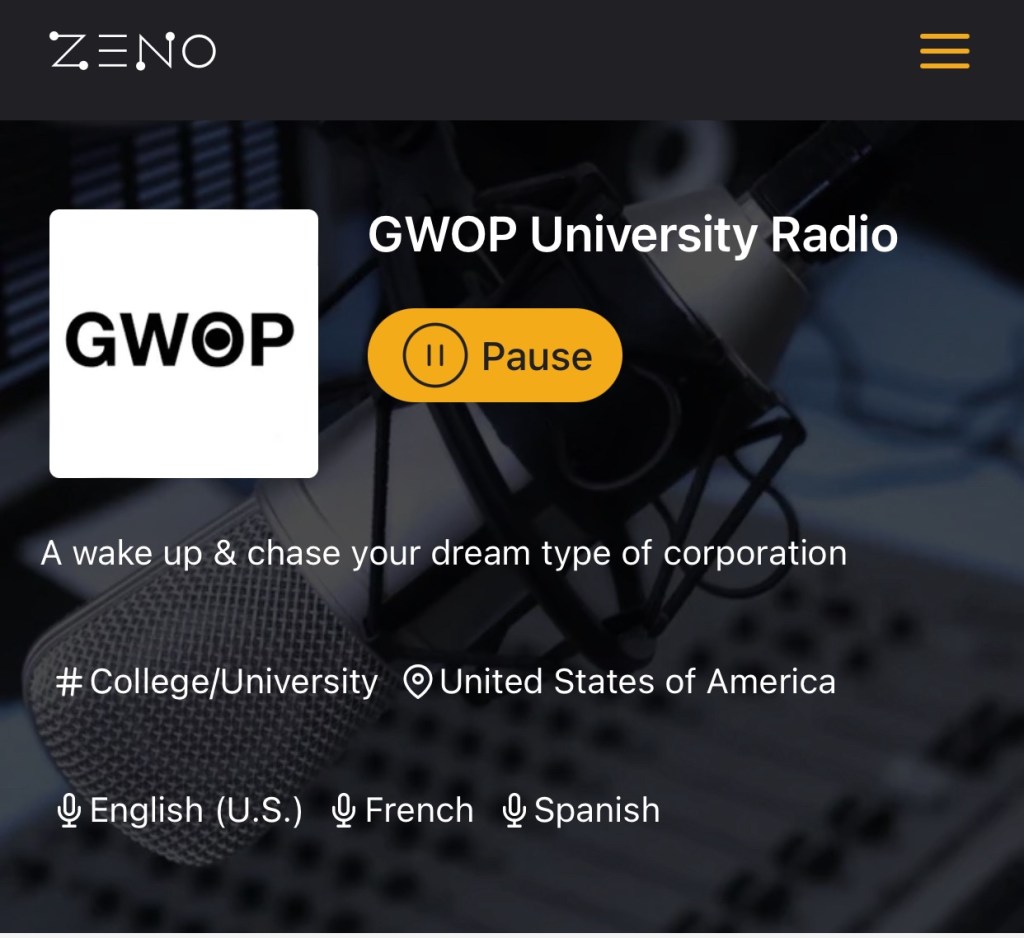
Checkout GWOP University Radio for new music every week by BEEZY & friends:
https://zeno.fm/radio/gwop-university-radio/
 KIM Bell : Digital Vision Art Gallery