
Bell Notes 🛎️ 📝

Immerse yourself in the hyper creative mind of Kim Bell. Discover our impressive collection and experience the magic of digital art.
How Artificial Intelligence Has Enhanced Human Natural Stupidity
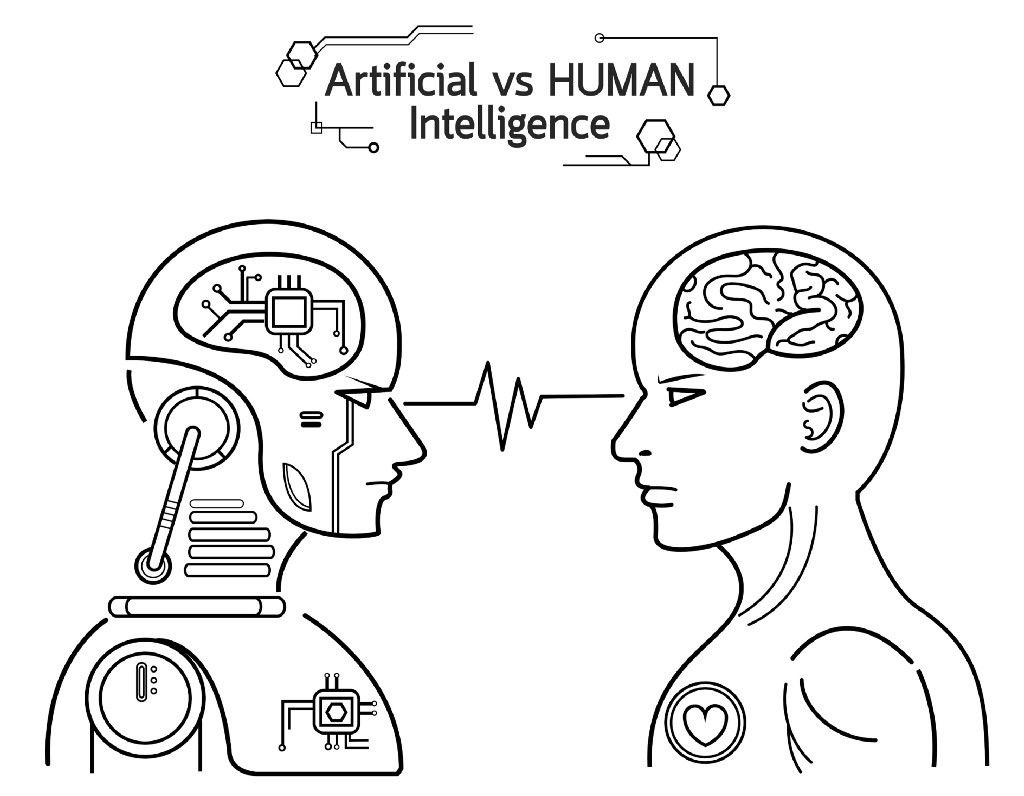
The rise of artificial intelligence (AI) has been nothing short of revolutionary. From self-driving cars to chatbots, AI is reshaping how we live, work, and communicate. But along the way, it has also amplified something humanity has always been good at—our natural stupidity. Ironically, in the pursuit of making us smarter and more efficient , AI has unintentionally fueled some of our worst tendencies. Let’s explore how.
Remember when people had to actually think to solve problems? With AI tools like ChatGPT, Grok, search engines, and automated assistants, critical thinking has taken a backseat. Need to write an email? Ask AI. Can’t solve a simple math problem? Use a calculator. Directions? Google Maps has your back.
The more we let AI do the thinking, the less we seem to use our brains. Over time, this reliance risks creating a generation that can Google anything but understand nothing.
AI isn’t perfect, but many people treat it like the ultimate authority. If the algorithm says it, it must be true, right? This blind faith has led to everything from poorly informed decisions to bizarre behavior.
Take, for example, people who rely on AI-generated travel directions—only to end up stranded in the middle of nowhere because they didn’t think to question the route. Or companies using AI to screen job applicants, rejecting qualified candidates because “the algorithm” said no.
Trust is good; blind trust is stupidity in disguise.
AI has made it easier than ever to create convincing deepfakes and spread misinformation at lightning speed. What happens when you pair powerful technology with a public that doesn’t fact-check? Chaos.
Deepfake videos, AI-generated news articles, and manipulated images have duped millions, fueling conspiracy theories and misinformation. Instead of fostering understanding, AI has supercharged our natural gullibility.
AI tools like Photoshop and ChatGPT make anyone feel like an expert in everything—graphic design, writing, coding, you name it. While these tools democratize creativity, they also lead to overconfidence. People are publishing half-baked ideas and poorly informed opinions, all with AI polish.
Just because AI makes it look good doesn’t mean it is good. But try explaining that to someone who thinks their AI-edited selfie makes them a professional photographer.
AI’s ability to curate content based on our preferences has turned social media and entertainment platforms into addictive rabbit holes. Endless scrolling, binge-watching, and doomscrolling are the new norms, thanks to AI-driven algorithms that cater to our laziest instincts.
While AI personalizes content to keep us engaged, it’s also shrinking our attention spans and fueling procrastination. Humanity: 0. AI: 1.
Not everything needs AI, but that hasn’t stopped us. Smart fridges, AI-powered toothbrushes, and voice-activated light switches are now a thing. Do we really need an app to tell us when we’re out of milk?
By overengineering the mundane, we’re losing touch with the joy of simple tasks. Plus, when these devices inevitably fail, we’re left helpless, staring at a fridge that won’t open because it needs a software update.
AI has sparked widespread fear about job automation, but instead of focusing on how to adapt and upskill, many have chosen to panic and complain. Ironically, this fear often distracts people from the opportunities AI creates.
By focusing on doom-and-gloom predictions, we’re ignoring the chance to work alongside AI and do things better, faster, and smarter. Instead, we’d rather bemoan our impending robot overlords.
AI isn’t going anywhere, and neither is human stupidity. But we can strike a balance. Instead of outsourcing our brains to machines, let’s use AI as a tool to complement our thinking—not replace it. Let’s stay curious, question what we see, and remember that with great power comes great responsibility (thanks, Uncle Ben).
AI can make us smarter, faster, and more creative—but only if we don’t let it enhance our natural stupidity in the process. Let’s be the generation that uses AI wisely, not the one that proves the machines were right about us all along.
The Solitude Solution: How Being Alone Can Unlock Your Artistic Potential
In a world where connection is currency and distraction is ever-present, solitude is often misunderstood. To many, being alone evokes loneliness or isolation, but to artists, solitude can be a crucible—a necessary space to refine, strengthen, and evolve their craft. The act of creating art demands time, focus, and introspection, all of which thrive in solitude.
As someone who has spent countless hours navigating the realms of creativity, I can attest to this truth: being alone is not just a state of being but a catalyst for transformation. Here’s how solitude can enhance your artistry and propel your creative growth.
Artistic mastery is built on practice—not mere repetition, but intentional, focused practice. When you’re alone, you have the freedom to dive deeply into your craft, free from external judgment or distraction. Alone, there is no need to justify your time, explain your methods, or compromise your process to accommodate others.
The solitude of the studio, the writer’s desk, or the practice room allows you to experiment boldly and fail often. These failures, when experienced privately, become lessons rather than public defeats. Over time, these moments of quiet effort accumulate into something extraordinary.
Harvard psychologist Anders Ericsson coined the term “deliberate practice” to describe the focused, purposeful effort required to achieve expertise. Being alone allows you to enter this state of deliberate practice, where you can push your boundaries, analyze your weaknesses, and build new strengths. In solitude, every brushstroke, note, or line of prose becomes a step toward mastery.
Art, at its core, is an expression of the self. To create authentically, you must understand your emotions, experiences, and perspectives. Solitude is the ideal environment for this kind of introspection.
When you are alone, you can confront your inner world without distraction. These moments of self-reflection often lead to the discovery of new ideas, themes, and styles. You begin to ask the essential questions: What do I want to say? What moves me? What do I fear?
Virginia Woolf, a pioneer in modernist literature, famously wrote about the necessity of “a room of one’s own.” While her call for solitude stemmed from a broader argument about women’s access to creative opportunities, her insight applies universally. A quiet space, both literal and metaphorical, allows you to hear your inner voice—a voice often drowned out by the noise of daily life.
Art thrives in experimentation. Solitude grants you the freedom to try new techniques, styles, or approaches without fear of judgment. The absence of an audience liberates you to take creative risks, to make mistakes, and to learn from them.
Think of solitude as a laboratory. In this space, you are the scientist, testing hypotheses and observing results. Maybe you combine unexpected colors on a canvas, try a new poetic form, or blend musical genres. Alone, there is no pressure to conform, only the joy of discovery.
Consider the work of Vincent van Gogh. In his letters, he often described the solitude of his artistic process. Though plagued by personal struggles, he used his time alone to refine his craft, producing hundreds of works that would later revolutionize modern art. His story reminds us that solitude, while challenging, is often the birthplace of innovation.
Distraction is the enemy of creativity. Social media, emails, and endless notifications fragment our attention, making it nearly impossible to enter the flow state where great work happens. Solitude removes these distractions, creating a mental environment where you can focus fully on your art.
When you are alone, you learn to rely on your own discipline. There is no one to prod you into action or hold you accountable, which forces you to develop intrinsic motivation. Over time, this self-discipline becomes a skill as valuable as your artistic talent.
The acclaimed pianist Glenn Gould famously chose solitude, even withdrawing from public performances to focus solely on his recordings. His choice to isolate himself allowed him to channel his energy entirely into his craft, producing some of the most celebrated interpretations of classical music.
Paradoxically, being alone can make you feel more connected—not to people, but to the artistic lineage you’re a part of. When you work in solitude, you can engage deeply with the works of those who came before you.
Read the journals of Frida Kahlo, study the compositions of Bach, or analyze the novels of James Baldwin. In solitude, you’re free to absorb their wisdom, allowing their influence to shape and inspire your own work. This connection to a broader creative tradition can provide a sense of purpose and belonging, even in your most solitary moments.
Being alone isn’t always easy. It requires you to confront yourself, to grapple with your fears and insecurities. But within this solitude lies an extraordinary opportunity: the chance to grow as an artist and as a person.
The next time you find yourself alone, don’t fill the silence with distractions. Instead, embrace it. Pick up your brush, your pen, your instrument. Dive into the stillness and see where it takes you.
In the words of Rainer Maria Rilke, “Solitude is a place of purification.” When you embrace solitude, you don’t just create art—you transform yourself into the kind of artist you’ve always aspired to be.
Thanks for reading


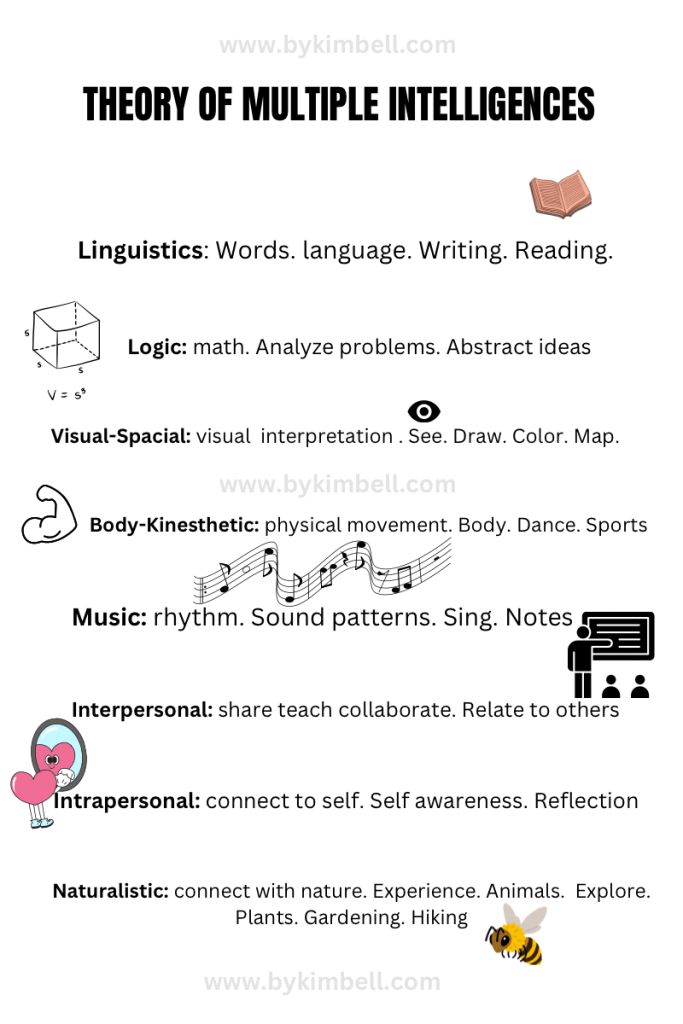
7 Types of Intelligences Study –
Morning Routine:
Midday Activities:
Afternoon Schedule:
Evening Routine:
Growing up in the 1980s, my introduction to the English language was anything but conventional. While many kids learned their ABCs through nursery rhymes or storybooks, my formative years were deeply influenced by the vibrant, emerging genre of rap music. This unexpected source became a powerful tool that not only enhanced my language skills but also shaped my understanding of culture, identity, and expression.
From the first time I heard the rhythmic beats and clever wordplay of artists like Run-D.M.C., LL Cool J, and the Fat Boys I was captivated. The infectious energy of rap music turned language into a dynamic experience. Unlike traditional educational methods, rap encouraged me to explore vocabulary through rhythm and rhyme. Phrases were delivered in a way that made them memorable, transforming complex ideas into digestible snippets. I found myself replaying songs, not just for the beats but to dissect the lyrics, trying to understand the meanings behind the words and curious to how they came up with these poetic lines.
The use of alliteration, internal rhyme, and metaphor in rap lyrics opened up a new world of linguistic creativity. For instance, the clever wordplay found in LL Cool J’s verses introduced me to concepts of similes and metaphors long before I encountered them in a classroom setting. I began to see language as a living, breathing entity that could be molded and shaped to convey a wide array of emotions and stories.
As I immersed myself in rap, my vocabulary expanded exponentially. Songs often featured slang and colloquialisms that were integral to understanding the culture they emerged from. Artists like Public Enemy and N.W.A. tackled social issues, using language that was both direct and evocative. I was introduced to terms and phrases that reflected real-life experiences, far removed from the sanitized versions typically found in school textbooks. This exposure not only broadened my vocabulary but also provided context, helping me understand the nuances of the language in a way that formal education did not.
Rap music was more than just a genre; it was a cultural movement that resonated with the social and political climate of the time. Listening to artists share their experiences gave me a sense of connection and understanding of the world around me. The themes of struggle, resilience, and community woven into the lyrics mirrored the realities many faced, including my own family’s experiences. This cultural lens enriched my understanding of language, as I learned to appreciate the emotional weight behind the words.
Furthermore, rap’s emphasis on storytelling taught me the importance of narrative in language. I began to experiment with my own writing, attempting to capture my thoughts and experiences in a similar fashion. The practice of writing lyrics, even if just for fun, allowed me to play with language, encouraging creativity and self-expression.
Reflecting on my childhood, it’s clear that rap music was a pivotal force in my journey to mastering the English language. Through its rhythms, rich vocabulary, and cultural narratives, rap not only enhanced my linguistic skills but also shaped my identity and worldview. It taught me that language is not just a tool for communication; it is a powerful means of expression, connection, and understanding. As I continue to appreciate the art form today, I recognize that my love for language began with the beats and rhymes of rap music, forever leaving a poetic mark on my life.
Checkout GWOP University Radio for new music every week by BEEZY & friends:
https://zeno.fm/radio/gwop-university-radio/
In the realm of contemporary art and music, few narratives are as compelling as that of Kim “Beezy” Bell. A multifaceted artist whose creative journey began at the tender age of two, Bell’s experiences with auditory phenomena offer a unique lens through which we can explore the intersection of mental health and artistic expression. This exploration not only enriches our over standing of the creative process but also challenges conventional notions of sanity, inspiration, and the artist’s role in society.
From the very outset of his life, Kim Bell’s existence was marked by an extraordinary inner world. At two years old, he began hearing voices—whispers of creativity urging him to express himself through music and visual art. This phenomenon, often dismissed or pathologized in mainstream discourse, can be reinterpreted as a profound source of inspiration. In many cultures, the act of hearing voices has been associated with divine communication or heightened sensitivity to the world around us. For Bell, these voices became catalysts for a burgeoning artistic identity, shaping his understanding of self and the world.
The relationship between mental health and artistic genius has long fascinated scholars and critics alike. The notion that creative individuals may be more prone to psychological distress has been explored in various studies. Bell’s experience invites us to question the binary classifications of “madness” and “genius.” Rather than viewing his auditory experiences as mere symptoms of a disorder, we might consider them as integral components of his artistic toolkit. They have informed his unique soundscapes and visual motifs, contributing to a body of work that resonates deeply with audiences.
As Bell grew older, he began to harness these voices, transforming them into a distinct artistic language. His music, characterized by an eclectic blend of genres, mirrors the complexity of his inner dialogues. Each composition is imbued with the nuances of his experiences—joy, pain, confusion, and clarity. Bell’s approach challenges the conventional narrative that artists must suffer to create. Instead, he offers a perspective that acknowledges struggle while celebrating resilience and innovation.
Bell’s art serves as a bridge between his internal experiences and the external world. Through vibrant visuals and evocative melodies, he creates a dialogue not only with himself but also with his audience. His work invites viewers and listeners to confront their own perceptions of sanity and creativity. By publicly sharing his journey, Bell destigmatizes the discourse surrounding mental health, encouraging a broader understanding of the myriad ways individuals navigate their inner worlds.
Kim “Beezy” Bell exemplifies the profound connection between artistic expression and mental health. His journey reminds us that the voices we hear—literal or metaphorical—can guide us toward self-discovery and creativity. As we continue to explore the complexities of the human experience, Bell’s work challenges us to embrace the multifaceted nature of identity and expression. In doing so, we not only celebrate individual artistry but also cultivate a more compassionate and nuanced understanding of mental health in the contemporary landscape.
As we reflect on Bell’s narrative, we must recognize that the intersection of creativity and mental health is not merely a subject for academic inquiry but a vital aspect of our shared humanity. In embracing this complexity, we honor the voices that shape our lives and the art that emerges from them.
Listen to Bells top 8 songs at GWOP University Radio 24/7 online now: https://zeno.fm/radio/gwop-university-radio/
 KIM Bell Digital Art Gallery