
How Artificial Intelligence Has Enhanced Human Natural Stupidity
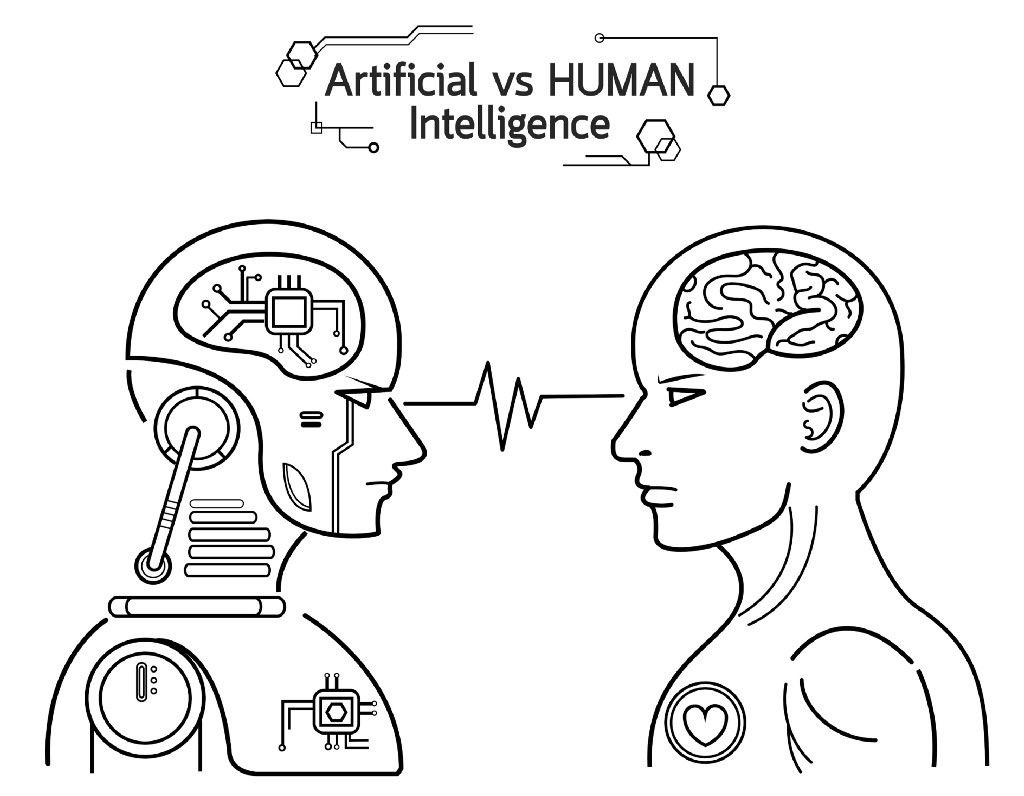
The rise of artificial intelligence (AI) has been nothing short of revolutionary. From self-driving cars to chatbots, AI is reshaping how we live, work, and communicate. But along the way, it has also amplified something humanity has always been good at—our natural stupidity. Ironically, in the pursuit of making us smarter and more efficient , AI has unintentionally fueled some of our worst tendencies. Let’s explore how.
1. Outsourcing Thinking to Machines
Remember when people had to actually think to solve problems? With AI tools like ChatGPT, Grok, search engines, and automated assistants, critical thinking has taken a backseat. Need to write an email? Ask AI. Can’t solve a simple math problem? Use a calculator. Directions? Google Maps has your back.
The more we let AI do the thinking, the less we seem to use our brains. Over time, this reliance risks creating a generation that can Google anything but understand nothing.
2. The Rise of “AI as Authority” Syndrome
AI isn’t perfect, but many people treat it like the ultimate authority. If the algorithm says it, it must be true, right? This blind faith has led to everything from poorly informed decisions to bizarre behavior.
Take, for example, people who rely on AI-generated travel directions—only to end up stranded in the middle of nowhere because they didn’t think to question the route. Or companies using AI to screen job applicants, rejecting qualified candidates because “the algorithm” said no.
Trust is good; blind trust is stupidity in disguise.
3. Deepfake Drama and Fake News Frenzies
AI has made it easier than ever to create convincing deepfakes and spread misinformation at lightning speed. What happens when you pair powerful technology with a public that doesn’t fact-check? Chaos.
Deepfake videos, AI-generated news articles, and manipulated images have duped millions, fueling conspiracy theories and misinformation. Instead of fostering understanding, AI has supercharged our natural gullibility.
4. The Illusion of Expertise
AI tools like Photoshop and ChatGPT make anyone feel like an expert in everything—graphic design, writing, coding, you name it. While these tools democratize creativity, they also lead to overconfidence. People are publishing half-baked ideas and poorly informed opinions, all with AI polish.
Just because AI makes it look good doesn’t mean it is good. But try explaining that to someone who thinks their AI-edited selfie makes them a professional photographer.
5. Screen Addiction 2.0
AI’s ability to curate content based on our preferences has turned social media and entertainment platforms into addictive rabbit holes. Endless scrolling, binge-watching, and doomscrolling are the new norms, thanks to AI-driven algorithms that cater to our laziest instincts.
While AI personalizes content to keep us engaged, it’s also shrinking our attention spans and fueling procrastination. Humanity: 0. AI: 1.
6. Overengineering the Simple Things
Not everything needs AI, but that hasn’t stopped us. Smart fridges, AI-powered toothbrushes, and voice-activated light switches are now a thing. Do we really need an app to tell us when we’re out of milk?
By overengineering the mundane, we’re losing touch with the joy of simple tasks. Plus, when these devices inevitably fail, we’re left helpless, staring at a fridge that won’t open because it needs a software update.
7. The Great Job Replacement Panic
AI has sparked widespread fear about job automation, but instead of focusing on how to adapt and upskill, many have chosen to panic and complain. Ironically, this fear often distracts people from the opportunities AI creates.
By focusing on doom-and-gloom predictions, we’re ignoring the chance to work alongside AI and do things better, faster, and smarter. Instead, we’d rather bemoan our impending robot overlords.
So, What’s the Solution?
AI isn’t going anywhere, and neither is human stupidity. But we can strike a balance. Instead of outsourcing our brains to machines, let’s use AI as a tool to complement our thinking—not replace it. Let’s stay curious, question what we see, and remember that with great power comes great responsibility (thanks, Uncle Ben).
AI can make us smarter, faster, and more creative—but only if we don’t let it enhance our natural stupidity in the process. Let’s be the generation that uses AI wisely, not the one that proves the machines were right about us all along.
 KIM Bell : Digital Vision Art Gallery